


5 Essential Tips to Craft a Gripping Thriller That Keeps Readers on Edge
Thrillers captivate readers by delivering suspense, unexpected twists, and high stakes. Writing a thriller that hooks readers from the first page and refuses to let go requires skill and careful planning. If you want to create a story that keeps readers turning pages late into the night, these five tips will help you build tension, develop compelling characters, and craft a plot that surprises and satisfies.

Build Suspense Through Pacing and Stakes
Suspense is the heartbeat of any thriller. To keep readers on edge, control the pacing carefully. Alternate between fast-paced scenes where danger feels immediate and slower moments that build anticipation. Avoid long stretches without conflict or tension.
Raise the stakes early. Make sure your protagonist faces real consequences if they fail. For example, a detective chasing a serial killer should feel the pressure of time running out and innocent lives at risk. The higher the stakes, the more invested readers become.
Use cliffhangers at the end of chapters to encourage readers to keep going. For instance, reveal a shocking secret or a sudden threat just before a break. This technique creates a sense of urgency and curiosity.
Create Complex Characters with Clear Motivations
Thrillers thrive on characters who feel real and whose choices matter. Your protagonist should have clear goals and flaws that make their journey compelling. Avoid one-dimensional heroes or villains. Instead, give them conflicting desires or moral dilemmas.
For example, a spy who must betray a friend to save a country adds emotional depth. Readers connect with characters who struggle and grow, making the suspense more personal.
Don’t forget the antagonist. A well-developed villain with believable motives makes the conflict more intense. A villain who believes they are the hero of their own story adds layers to the narrative.
Use Setting to Enhance Mood and Tension
The setting can become a character in your thriller. Choose locations that amplify the mood and support the plot. Is your story set in a claustrophobic apartment, a remote forest, or a bustling city at night? Each setting offers unique opportunities to create atmosphere.
Describe sensory details that immerse readers. The creak of floorboards, the flicker of a streetlamp, or the chill of a foggy morning can heighten tension. For example, a chase scene through narrow alleyways feels more intense when readers can picture the tight spaces and shadows.
Changing settings can also influence pacing. Moving from a tense indoor confrontation to a chaotic outdoor escape keeps the story dynamic.

Plant Clues and Red Herrings Carefully
A gripping thriller challenges readers to solve the mystery alongside the protagonist. Plant clues throughout the story that make sense in hindsight but don’t give away the ending too soon. Balance this with red herrings—false leads that misdirect readers without frustrating them.
For example, a suspicious character might appear guilty but later turn out innocent. This keeps readers guessing and adds layers to the plot.
Make sure clues are subtle but fair. Readers should feel rewarded when they piece things together, not cheated by sudden revelations that come out of nowhere.
Write Clear, Vivid Action Scenes
Thrillers often rely on action to maintain excitement. Write action scenes that are easy to visualize and follow. Avoid confusing descriptions or too many characters moving at once.
Use short sentences and active verbs to create a sense of urgency. For example, instead of “He was running quickly through the dark alley,” say “He sprinted down the dark alley, heart pounding.”
Show the physical and emotional impact of action. Describe the protagonist’s breath, the pounding of their heart, or the sting of a wound. This draws readers deeper into the moment.
Writing a thriller that keeps readers on edge means balancing suspense, character depth, setting, clues, and action. By focusing on these five tips, you can create a story that grips readers from start to finish. Start by raising the stakes and building tension, then develop characters who feel real and face meaningful challenges. Use setting and sensory details to enhance mood, plant clues that invite readers to solve the mystery, and write action scenes that pulse with energy.
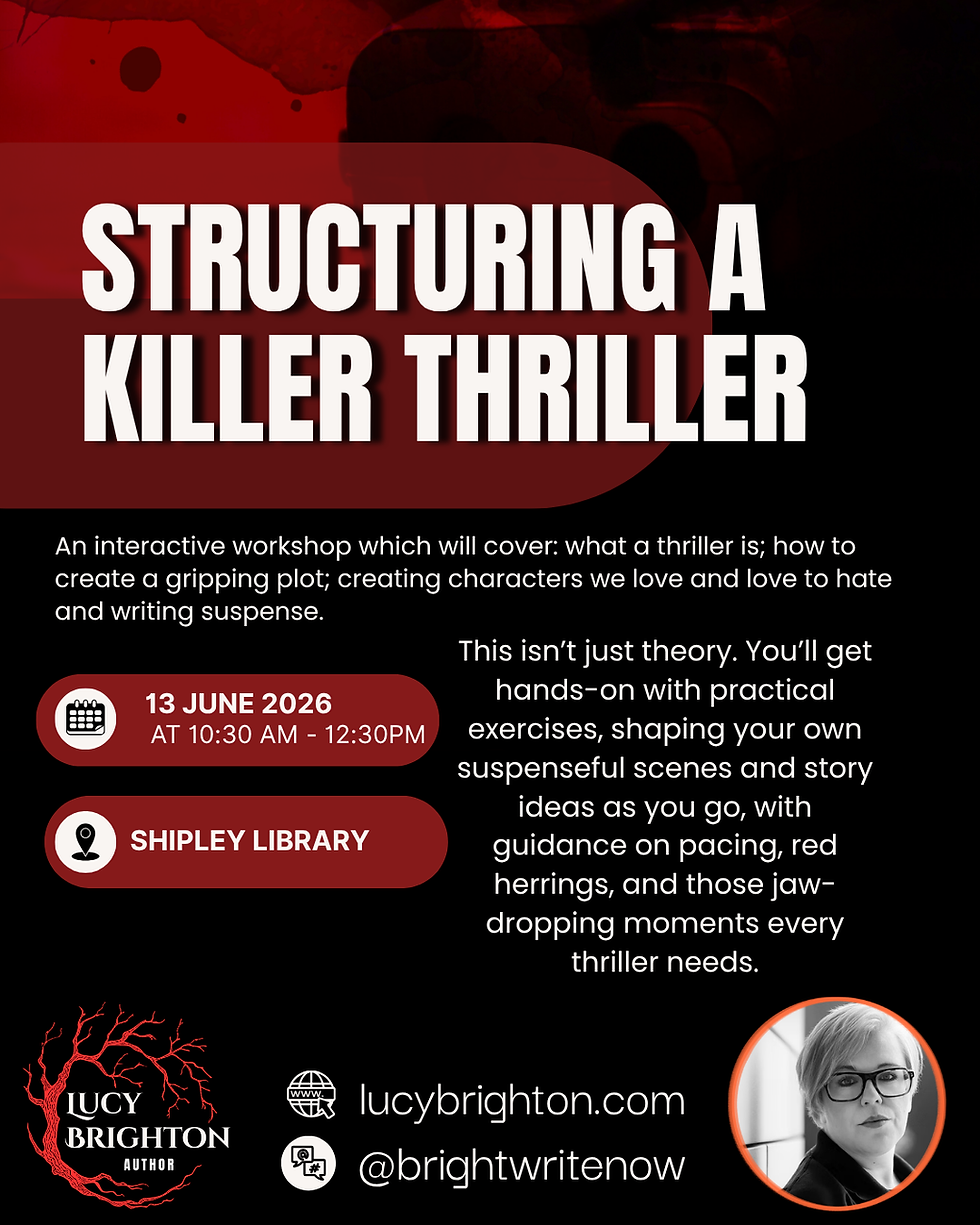
If you want to hear more, join me for a session at Shipley Library.
Or if you are ready to take the plunge, why not enrol on my How Novel: A Novel Writing Course


Comments